Staying Steady on Your Feet
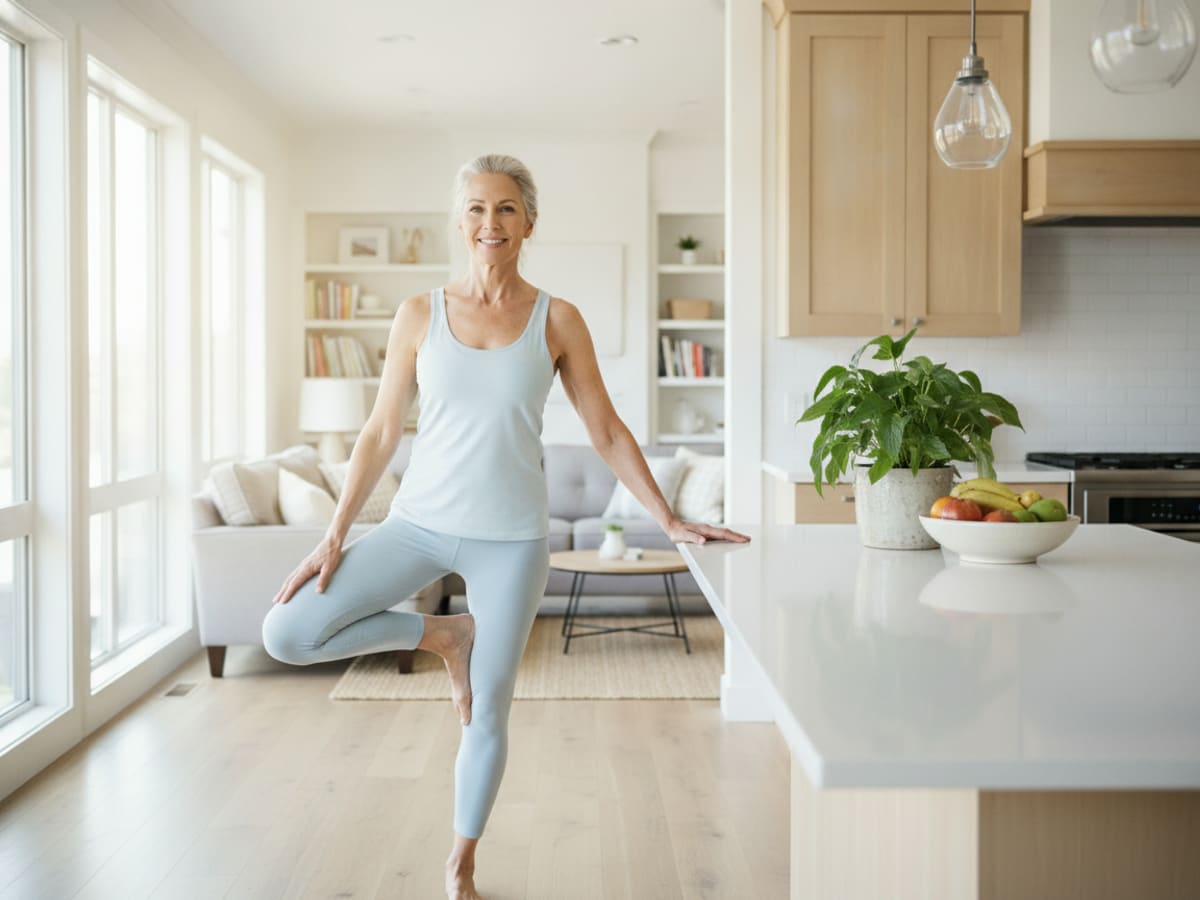
Good balance is something you can practice a little at a time. This article covers easy everyday habits and when to check in with a professional.
Why balance matters at every age
Balance isn't something that only becomes important later in life. It's a skill your body uses all day long, whether you're stepping off a curb, reaching for a high shelf, or carrying groceries up the stairs. Most of the time you don't notice it, because it works quietly in the background.
Staying steady relies on several systems working together: your eyes, your inner ear, the sensors in your muscles and joints, and the strength in your legs and core. As the years go by, some of these can change gradually. Reaction times may slow a little, and muscles can lose strength if they aren't used regularly.
The encouraging part is that balance responds to practice. Small, regular habits can help you feel more confident on your feet, and there's no age at which it's too late to pay attention to it. You don't need a gym or special equipment to begin.
Simple moves to try near a counter or wall
Choose a spot where you can rest a hand on something sturdy, like a kitchen counter or a wall. Wear comfortable shoes or go barefoot on a non-slip surface, and move slowly. If anything feels painful or makes you dizzy, stop.
Here's a gentle sequence to try:
- Stand tall with your feet about hip-width apart, one hand lightly on the counter. Take a few slow breaths and notice how your weight feels across both feet.
- Shift your weight to one foot and lift the other just slightly off the floor. Hold for a few seconds if you can, then switch sides.
- Rise onto your toes, pause, and lower back down with control. Repeat several times.
- Stand with one foot directly in front of the other, as if walking along a line. Hold for a few breaths, then switch feet.
- Practice sitting down and standing up from a sturdy chair without using your hands, if that feels comfortable.
You can use as much support as you need. As things feel easier, you might try using just a fingertip on the counter. Many people find it easiest to tie these moves to a daily habit, such as while the coffee brews or the kettle heats.
Other activities can support balance too. Walking, gardening, dancing, and gentle movement classes all ask your body to shift and adjust. Choose something you enjoy, because that's the kind of movement you're most likely to keep doing.
Making your home a little safer
Your home is where you spend a lot of time, so small changes there can go a long way. Take a slow walk through each room and look at it as if you were seeing it for the first time.
Some things to look for:
- Loose rugs or curled edges that could catch a toe. Consider removing them or securing them firmly to the floor.
- Cords stretched across walkways. Rerouting them along walls can clear your path.
- Clutter on stairs, in hallways, or beside the bed.
- Items stored too high or too low. Keeping everyday things at a comfortable middle height means less stretching and bending.
- Slippery spots in the bathroom. A non-slip mat in the tub or shower can help, and a sturdy grab bar near the tub or toilet is worth considering.
- Stairs without a solid handrail. Having a rail on both sides, if possible, offers extra support.
You don't have to do everything in one afternoon. Pick one room this week and one the next. Small adjustments add up.
Footwear and lighting basics
What you wear on your feet affects how stable you feel. Shoes that fit well, have a firm, non-slip sole, and stay securely on your foot generally give you better footing. Very thick, soft soles can make it harder to feel the ground, and high heels or loose backless styles can make you less steady.
Walking around the house in socks or loose slippers can be slippery, especially on smooth floors. If you like something comfortable indoors, look for slippers that fit snugly and have a grippy sole.
Lighting matters just as much. Our eyes often need more light as we age, and dim spaces make it harder to spot steps, thresholds, or objects on the floor. A few easy ideas:
- Keep hallways, stairways, and bathrooms well lit.
- Place a night light along the path between your bed and the bathroom.
- Keep a lamp or flashlight within reach of your bed.
- Make sure light switches are easy to find at the entrance to each room.
Regular eye exams are also part of staying steady, since changes in vision can affect balance without you noticing.
Talking with a doctor or physical therapist
A professional can look at your individual situation in a way no general article can. It's a good idea to bring up balance at your regular checkups, even if nothing seems wrong. Some medications, health conditions, and changes in vision or hearing can affect how steady you feel, and a doctor can help you sort out what might be involved.
A physical therapist can assess your balance and strength and suggest exercises that suit your body and your goals. They can also advise on whether a cane or walker might be useful and how to use it properly.
It can help to jot down a few notes before your visit: when you've felt unsteady, what you were doing, and any medications you take. That gives your provider a clearer picture.
Looking after your balance is really about looking after your independence. A few minutes of gentle practice, a safer home, good shoes, and a conversation with someone who knows your health can all help you keep doing the things you enjoy.