A Kitchen That Makes Good Choices Easier
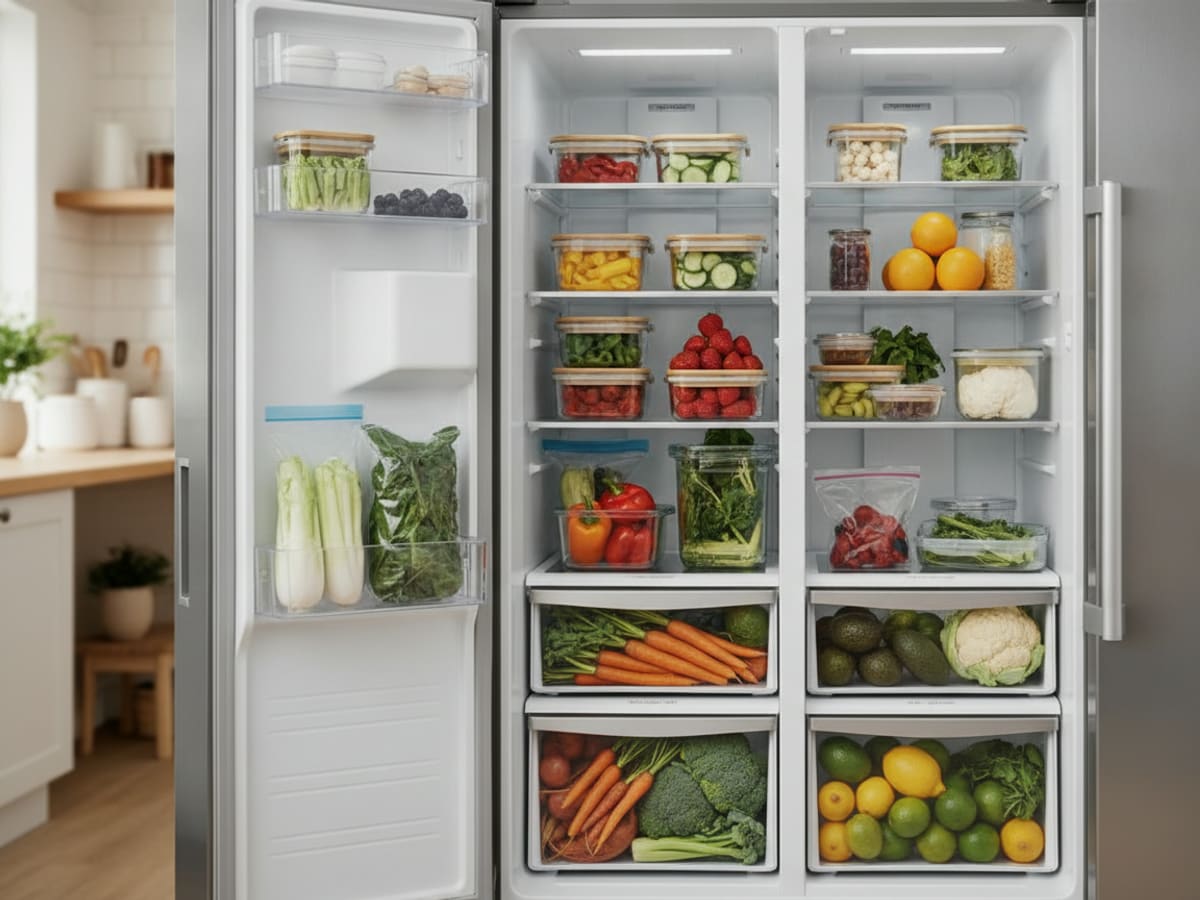
What you see first in the fridge and pantry often shapes what you reach for. A few small rearrangements can make everyday eating simpler.
Why the setup matters more than willpower
Most of us make a surprising number of food choices without really deciding anything. We grab what's closest, what's already open, or what takes the least effort. When you're tired, hungry, or rushed, that's usually how it goes.
That's not a character flaw. It's just how busy brains work. Willpower tends to run low at the end of a long day, right when dinner decisions pile up.
The good news is that you can shift the odds in your favor without relying on discipline. If the foods you want to eat are easy to see and easy to reach, and the foods you'd like to eat less often take a little more effort, your kitchen does some of the work for you.
You don't need a remodel or a new set of containers. A few small changes, made once, can keep helping all week.
Putting the foods you want to eat in front
Think about what you see when you open your refrigerator, your pantry, and the counter. Those eye-level spots are prime real estate. Whatever lives there gets noticed, and what gets noticed gets eaten.
Here are a few ways to put that to use:
- Keep a bowl of fruit you actually enjoy on the counter, where you walk past it every day.
- Place washed, ready-to-eat produce at the front of a shelf, not buried in the crisper drawer.
- Put water, or a pitcher of water with sliced citrus or cucumber, at eye level in the fridge.
- Store nuts, whole-grain crackers, or other snacks you like in clear containers on a low, easy-to-reach shelf.
- Move the foods you tend to forget about (leftover vegetables, hummus, yogurt) to the front so they don't expire unseen.
Visibility works in both directions. Foods in opaque containers or at the back of a cabinet are easy to overlook, which is fine for things you want to eat less often and not so helpful for the foods you're hoping to enjoy more.
Prepping a few basics ahead
Prepping doesn't have to mean cooking every meal on Sunday. For most people, that's too much. A smaller version works better: get a few building blocks ready so that putting together a meal takes minutes instead of an hour.
Consider choosing two or three of these each week:
- Wash and chop vegetables you like raw or roasted, such as carrots, peppers, or cucumbers.
- Cook a pot of a whole grain, like rice, quinoa, or barley.
- Roast a tray of vegetables that can be used in bowls, wraps, or omelets.
- Boil a few eggs to keep in the fridge.
- Rinse and portion canned beans or lentils.
- Make a simple dressing or sauce you can spoon over almost anything.
With these on hand, a meal can be as simple as a grain, a vegetable, something with protein, and a sauce. You're assembling, not starting from scratch.
If you only have energy for one thing, pick whichever step usually feels like the biggest hurdle on a busy night. For many people, that's chopping.
Rethinking where treats live
You don't have to banish the foods you enjoy. Treats are part of a satisfying way of eating, and strict rules often backfire by making those foods feel more tempting.
The idea is to give treats a home that takes a bit more intention to visit. That small pause is often enough to turn automatic snacking into a real choice.
- Keep treats in a cabinet or opaque container instead of out on the counter.
- Put them on a higher or lower shelf, not at eye level.
- Serve a portion onto a plate or bowl instead of eating from the bag.
- If you buy large packages, consider dividing them into smaller servings when you get home.
- Notice whether the foods you reach for mindlessly really need to be in the house all the time, or whether you'd enjoy them more as an occasional purchase.
If other people share your kitchen, you can talk it through together. A shared shelf or bin for everyone's treats can make things simpler than trying to hide anything.
A five-minute pantry reset
You can try this on a quiet evening or while dinner is in the oven. It doesn't need to be perfect. The goal is to make your next few days a little easier.
- Clear a spot on the counter, then set out one or two items you'd like to eat more of, such as fruit or a bowl of nuts.
- Open your refrigerator and move the ready-to-eat foods to the front, at eye level.
- Check the pantry for anything past its date and set it aside to toss or donate if it's still good.
- Move your everyday treats to a less prominent shelf or into a closed container.
- Make a short list of two or three basics to prep this week, and write down what you'd need to pick up.
That's it. You can come back and adjust later. Notice what works, what gets used, and what keeps getting ignored, then tweak from there.
Over time, small changes tend to stick better than big overhauls, partly because they fit into the life you already have. Your kitchen can quietly support you, even on the days when you don't have much energy left to give.